Our Striping Process
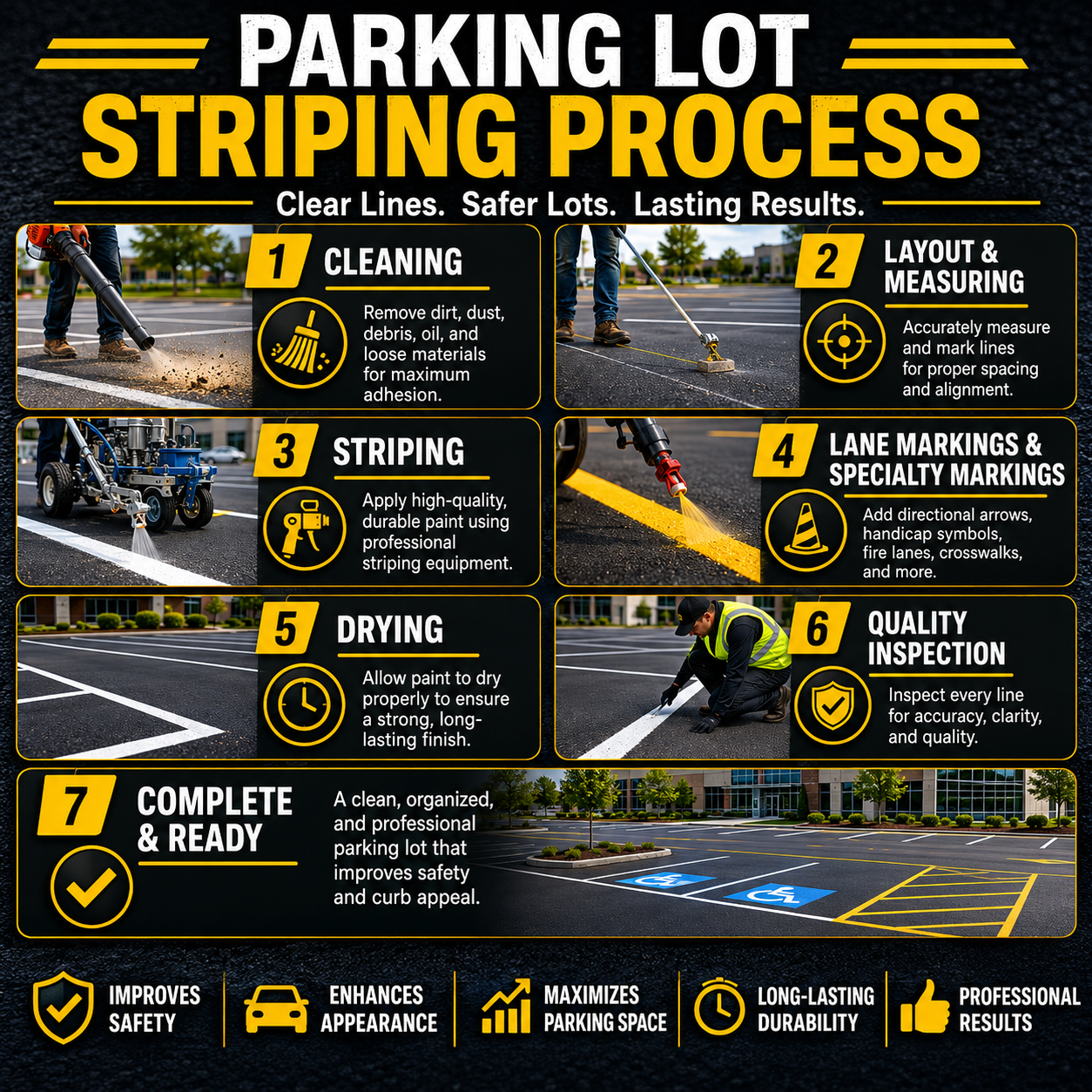
A practical field process for Tulsa commercial lots, from walkthrough to final inspection.
- Site walkthrough: We review entrances, traffic flow, ADA spaces, fire lanes, loading zones, oil exposure, pavement texture, sealcoat condition, drainage, and work-window limits.
- Measurements: We measure stall widths, drive aisles, crosswalk positions, access aisles, wheel-stop spacing, and stencil locations.
- Layout planning: We review parking count, one-way movements, pedestrian routes, fire lane access, warehouse traffic, and loading areas before painting.
- Surface prep: Loose dirt, gravel, sealcoat dust, standing moisture, and oil contamination can interfere with paint adhesion.
- Chalk layout: Chalk lines help catch crooked rows, misaligned stencils, blocked aisles, and conflicts around curbs, islands, storefronts, or loading doors.
- Striping application: We apply stall lines, arrows, crosswalks, curb markings, ADA symbols, hatch areas, and fire lane lettering with attention to overspray prevention and stencil alignment.
- Drying and curing: Heat, shade, humidity, and storms affect reopening. We cone fresh work and avoid traffic across wet markings.
- ADA verification: We review accessible stall markings, access aisles, hatch areas, route visibility, and sign coordination.
- Final inspection: We walk the completed work, review touch-up needs, and reopen sections when the paint is ready.